Solar Energy vs Grid Electricity - 25 Year Cost Comparison
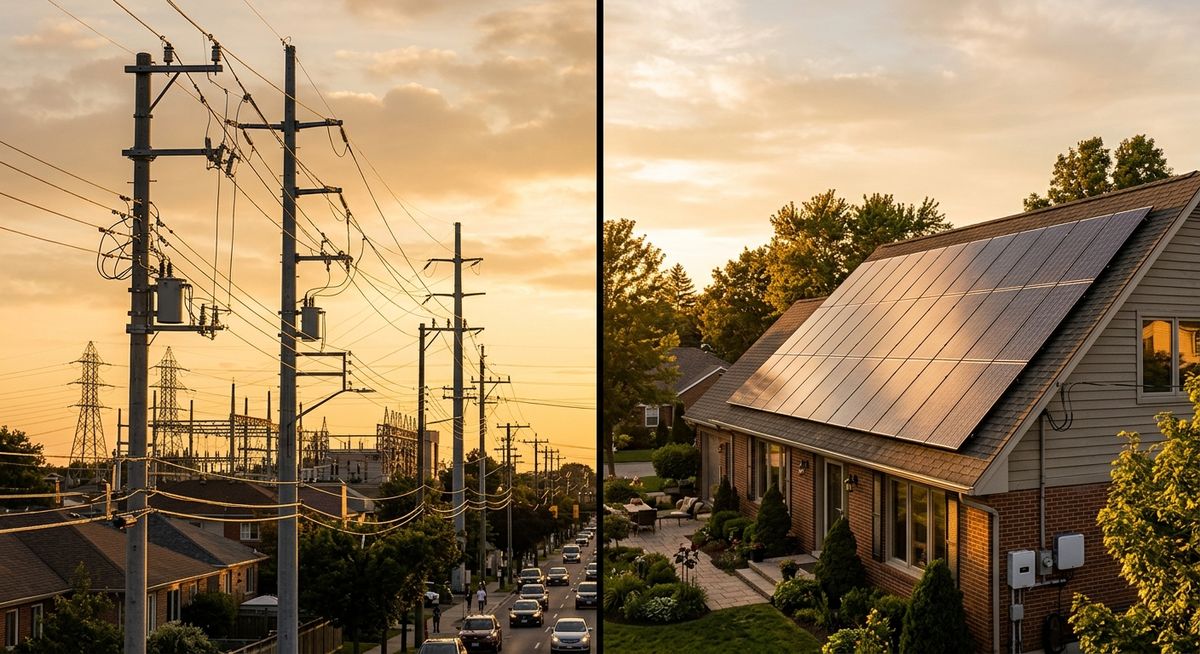
Over 25 years, a typical homeowner will spend $60,000 to $90,000 on grid electricity at current rate trends. A solar panel system that costs $18,000 after incentives produces the same electricity for a fraction of the price. Here is a detailed comparison.
Grid Electricity: The Rising Cost Problem
The average U.S. residential electricity rate is approximately $0.16/kWh in 2026. Electricity prices have risen an average of 3-5% annually over the past decade, and that trend is expected to continue due to infrastructure costs, fuel prices, and increased demand from electric vehicles.
Check your state's current rate with our Electricity Rates by State tool.
At a 4% annual increase, here is what a household using 1,000 kWh/month would pay over 25 years:
- Year 1 - $1,920/year ($0.16/kWh)
- Year 10 - $2,765/year ($0.23/kWh)
- Year 15 - $3,364/year ($0.28/kWh)
- Year 25 - $4,981/year ($0.42/kWh)
- 25-year total - approximately $79,950
Solar: Lock in Your Energy Cost
A 6 kW solar system costs approximately $18,000 after the federal tax credit and produces roughly 9,000 kWh per year (enough for a 750 kWh/month household in an average U.S. location). Your costs with solar:
- System cost (after ITC) - $18,000
- Annual maintenance - $100-200/year (cleaning, monitoring)
- Inverter replacement (year 12-15) - $1,500-2,500
- 25-year total cost - approximately $22,500-23,500
The 25-Year Savings Breakdown
Comparing the two scenarios:
- Grid electricity (25 years) - $79,950
- Solar ownership (25 years) - $23,000
- Net savings with solar - $56,950
That does not include any additional value from increased home resale price, which studies estimate at $15,000-$20,000 for a typical system.
Run your own comparison with our Solar vs Grid Comparison tool to see projections based on your specific electricity rate and usage.
When Does Solar Make Less Sense?
Solar may not be the best choice if you plan to move within 2-3 years, have heavy shading on your roof, or live in an area with very low electricity rates (under $0.08/kWh). Even in these cases, portable solar options can provide savings without a long-term commitment.
For a complete financial picture including payback timeline and monthly savings, use our Solar Savings Calculator.
Frequently Asked Questions
How much do solar panels save over 25 years?
A typical residential solar system saves $40,000 to $70,000 over 25 years compared to buying electricity from the grid. The exact amount depends on your local electricity rates, system size, and available incentives.
Do solar panels still save money if electricity rates do not increase?
Yes. Even with flat electricity rates, solar panels typically save $25,000 to $40,000 over 25 years because your upfront system cost is much lower than 25 years of grid electricity. Rate increases make the savings even larger.
What happens to solar panels after 25 years?
Solar panels do not stop working after 25 years - they just produce slightly less. Most panels retain 80-85% of their original output at year 25 and continue generating useful electricity for 30-35 years or more.