Solar Lease vs Buying Solar Panels in 2026, After the Tax Credit Ended
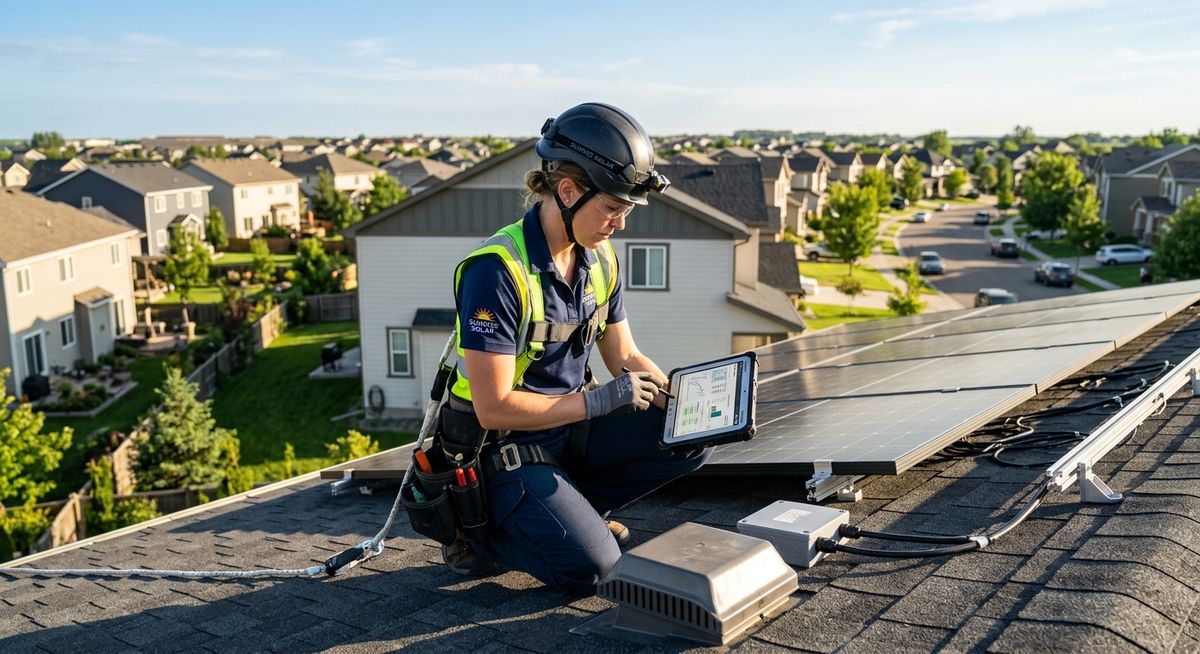
Since January 1, 2026, the main tax reason to buy solar panels instead of leasing them is gone. The IRS states that the Residential Clean Energy Credit "is not available for any property placed in service after December 31, 2025." A homeowner who buys a system this year pays the full price, less any state or utility incentives they qualify for. The companies behind solar leases and power purchase agreements (PPAs), on the other hand, may still be able to claim a federal business credit on the systems they own. That shift changes the math, but it does not settle the question for every household. Below is how each option works now, what the numbers look like and which contract terms matter most.
Buying, loans, leases and PPAs: how each one works
The Federal Trade Commission's consumer guide to solar power for your home describes three basic paths:
- Buying with cash or a loan. You own the system. With cash you pay the whole price when it is installed; with a loan you pay it over time plus interest. As the owner, you receive any state or local incentives and renewable energy certificates (RECs) the system qualifies for, and you are responsible for repairs the warranty does not cover.
- Lease. A solar company owns the panels on your roof and you pay a monthly fee to use them. The FTC notes that leases often run about 20 years and that the company usually handles maintenance.
- Power purchase agreement (PPA). The company owns the system and you pay for the electricity it produces at a price per kilowatt-hour (kWh) set by the provider, instead of a flat monthly fee.
Third-party ownership is now a large part of the market. Lawrence Berkeley National Laboratory's U.S. Distributed Solar and Storage 2026 Data Update reports that about 40% of residential systems installed in 2025 were third-party owned, up from 23% in 2023. Berkeley Lab also found that lower-income households were more likely to use leases and PPAs, while loans and cash purchases were more common among higher-income adopters.
What changed when the 25D credit ended
Until the end of 2025, a homeowner who bought a system could cut its net cost by 30% at tax time through section 25D of the tax code. The One Big Beautiful Bill Act, signed in July 2025, ended that credit early. If your system was placed in service in 2026 or later, you cannot claim it, even if you signed the contract in 2025.
Third-party owners are treated differently. A company that owns a residential system and leases it to you, or sells you its power, is a business and may claim the clean electricity investment credit (section 48E) instead. That credit has its own deadline under the new law: according to a Gibson Dunn analysis of the act, wind and solar projects that begin construction after July 4, 2026 must be placed in service by December 31, 2027 to qualify. Projects that began construction earlier follow different rules, and how they apply to home leases depends on IRS guidance and the provider's own tax position.
Two practical points follow from this:
- The credit belongs to the company, not to you. The FTC notes that only the system owner can claim tax credits and incentives, and that some PPA providers offer lower rates because they receive those benefits. Whether any of the credit shows up in your monthly price depends entirely on the provider, so ask.
- Deadline sales pitches deserve a check. If a salesperson says a lease price depends on installing before a tax deadline, ask for that in writing and ask what happens to your price if the installation is delayed past it.
What buying costs now
Berkeley Lab's installed prices are the up-front price paid by the system owner before any incentives. For residential systems installed in 2025, it reports these medians (in 2025 dollars per watt of capacity):
- $3.00 per watt for known cash purchases
- $4.50 per watt for known loan-financed systems
- $3.60 per watt across all host-owned systems
The median residential system in that data was 7.7 kilowatts (kW). At those medians, a 7.7 kW system works out to roughly $23,000 paid in cash or about $35,000 financed with a loan, before state or utility incentives. These are national medians, not quotes. Your price depends on your state, roof, equipment and installer, and the spread between cheaper and pricier installs is wide. Systems paired with a battery cost more: Berkeley Lab reports a median of $5.10 per watt of solar capacity for cash-purchased solar plus storage systems.
The gap between cash and loan prices is worth a close look. Berkeley Lab says loan-financed systems were priced considerably higher, potentially due in part to loan origination fees rolled into the up-front price, and its loan figures do not include interest payments. When you compare a loan with a lease, ask the installer for the cash price of the same system so you can see what the financing adds. For more on typical price ranges, see our solar panel cost guide.
What a lease or PPA costs
Leases and PPAs usually require little or nothing up front, which is their main appeal now that buyers no longer get the 30% credit. The cost shows up over the life of the contract instead:
- Monthly payment or price per kWh. Compare the PPA rate, or the lease payment divided by the system's expected monthly production, with your effective grid rate. Our guide to the average cost per kWh shows how to work out the rate on your own bill.
- Escalator. Many contracts raise the payment every year. The FTC advises checking whether payments will increase, when they might go up and by how much. A price that beats your utility today can end up higher later if the escalator outpaces your local rate increases.
- Contract length. Terms of around 20 years are common, and the FTC warns that ending a lease early can be costly.
- End of term. Ask whether you can renew, buy the system and at what price, or have it removed, and who pays for removal.
Savings projections in any proposal rest on assumptions about future utility rates. The FTC points out that a company's projected savings are hard to verify because future rates are uncertain. Ask the provider to show its calculation with flat utility rates as well as rising ones, and treat any savings figure as an estimate that depends on your usage, roof, rate plan and contract terms.
When each option tends to fit
Buying tends to fit when
- You expect to stay in the home long enough for your bill savings to cover the up-front cost. Our payback calculator lets you test this without the federal credit.
- You can pay cash, or you can get a loan whose total cost, including fees and interest, still leaves room for savings.
- Your state or utility offers rebates, performance payments or REC income that go to the system owner. Start with our State Incentive Finder, then confirm each program on your state energy office or utility website, since programs change often.
- You want the system to be something you own when you sell, rather than a contract a buyer has to accept.
A lease or PPA tends to fit when
- You cannot or do not want to pay a large sum up front or take on a loan.
- You prefer the company to handle monitoring, maintenance and repairs.
- The provider's price, including any escalator, stays below your effective grid rate in a flat-rate scenario, and the provider explains how its own tax credit affects the price.
- You expect to stay put for most of the term, or the contract transfers easily to a buyer.
Selling your home with a lease or PPA
The FTC notes that a solar contract might affect your options when you sell your house. It suggests asking whether the system can move with you, whether the contract can transfer to a buyer and whether the buyer must meet credit requirements. Before you sign, also ask what the buyout price would be at different points in the contract, and who pays to remove and reinstall the panels if the roof needs work during the term. Get every answer in the written contract, not just in the sales conversation.
Questions to ask before you sign
Whether you buy or lease, the FTC lists the contract terms to check: the length, monthly or per-kWh costs and any other fees, minimum production guarantees and what happens if the system underperforms, who pays for maintenance and repairs, early termination fees, and your options at the end of the term. It also warns against any company that pressures you for a quick decision or asks you to sign without time to review.
A simple way to compare: get written quotes from at least two or three installers, and ask each for the cash price, the loan terms and the lease or PPA terms for the same system. Then compare the total you would pay over the years you expect to own the home under each option. Your state's page in our solar company directory lists local installers and electricity rates to start from. Because export credits set what your extra solar power is worth, read how net metering works before you trust any savings estimate.
Frequently Asked Questions
Can I still get the 30% solar tax credit in 2026?
No, not as a homeowner. The IRS states that the Residential Clean Energy Credit is not available for any property placed in service after December 31, 2025. If your system was installed and placed in service in 2025, you claim the credit on your 2025 federal return.
Do solar leases and PPAs still get a federal tax credit?
The company that owns a leased or PPA system may be able to claim a business credit under section 48E, subject to deadlines set by the One Big Beautiful Bill Act. That credit goes to the company, not to you. Whether any of it lowers your monthly price depends on the provider, so ask how it affects your rate.
Is it cheaper to lease or buy solar panels now?
It depends on your price, financing and how long you stay. Berkeley Lab reports a 2025 median installed price of $3.00 per watt for cash purchases and $4.50 per watt for loan-financed systems, before incentives. Compare that with the total of all lease or PPA payments over the term, including any annual escalator.
What happens to a solar lease when I sell my house?
It depends on the contract. Common options are transferring the lease to the buyer, who may need to meet the company's credit requirements, or paying off or buying out the system. The FTC recommends checking these terms before you sign, since the contract can affect your sale.
Can I buy my leased solar panels later?
Many leases and PPAs include a purchase option during or at the end of the term, at a price set by the contract. Ask for the buyout price at several points in the term in writing. If the contract has no purchase option, find out whether you can renew or have the system removed instead.